
Distinguished Speakers
Coming Soon
This page is currently being prepared and will be available shortly.
Please check back soon for updates.
Featured and Keynote Speakers
Key-Note Speakers
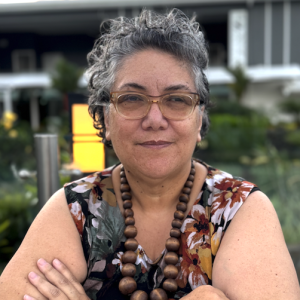
Kate Brown
Executive Director
Global Island Partnership, New Zealand
Kate Brown is Executive Director of the Global Island Partnership (GLISPA), a global platform advancing island leadership in biodiversity, climate, and sustainable development. She works across governments, Indigenous communities, NGOs, and international institutions to strengthen collaboration, mobilise partnerships, and support island‑led solutions. Based in Aotearoa New Zealand, she brings more than two decades of experience connecting Pacific, Caribbean, Indian Ocean and other island regions, with a particular focus on turning high‑level commitments into practical action for communities on the ground. Her work centres on relationships, implementation and community outcomes, helping islands move from strategy to delivery in ways that honour culture and local leadership.
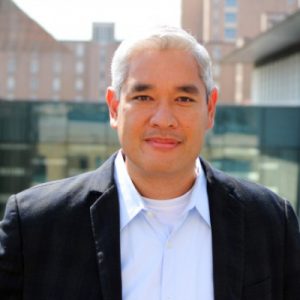
Bayani Cardenas
Hydrology Professor
The Department of Earth and Planetary Sciences, The Jackson School of Geosciences at the University of Texas at Austin
M. Bayani Cardenas is a hydrology professor in the Department of Earth and Planetary Sciences of the Jackson School of Geosciences at the University of Texas at Austin. He received his education from the University of the Philippines-Diliman, the University of Nebraska-Lincoln, and the New Mexico Institute of Mining and Technology. He has been a professor at UT Austin since 2006 where he has mentored many visiting scientists, post-doctoral fellows, PhD, MS and BS students.
Prof. Cardenas’ research seeks to understand flow and transport processes across different hydrologic settings, water quality and quantity problems, and scales, using a combination of theoretical, computational, and observational methods. The hydrology and hydrogeology of coastal areas of islands is a key focus amongst his diverse research topics.
Prof. Cardenas has published extensively. He has more than 185 journal articles and hundreds of conference presentations. He was the 2025 Geological Society of America’s Birdsall-Dreiss-LaMoreaux Lecturer. He has served as Editor and Associate Editor on several journals, including currently serving as an Editor for AGU Advances.
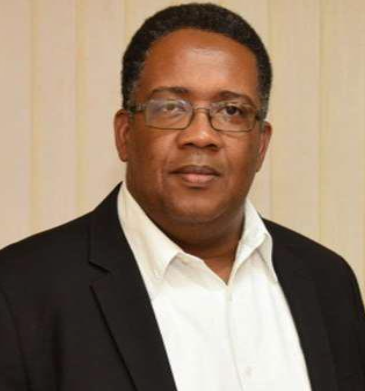
Michael Taylor
Lecturer in the Faculty of Science and Technology
University of the West Indies Mona Campus, Jamaica
Michael Taylor is Professor of Climate Science and Dean of the Faculty of Science and Technology at the Mona Campus of The University of the West Indies (UWI). He is also Co-Director of the Climate Studies Group, Mona (CSGM), a research body that explores climate variability and change in the Caribbean region.
He is widely published and cited for his scientific work on the impacts of climate change on the Caribbean’s small island states. Professor Taylor served as a Coordinating Lead Author for the Intergovernmental Panel on Climate Change (IPCC) Special Report on Global Warming of 1.5°C. He is the recipient of the Silver Musgrave Award for Science (2013) and the 2019 ANSA Caribbean Laureate for Excellence in Science. In 2021, he was named among Apolitical’s 100 Most Influential Academics in Government globally. Most recently, he authored a chapter in Greta Thunberg’s The Climate Book.
Professor Michael Taylor is a Fellow of the Caribbean Academy of Sciences and the World Academy of Sciences.
Michael Taylor
Researcher, Journalist & Adviser
Small Island Developing States (SIDS)
Michael Taylor is Professor of Climate Science and Dean of the Faculty of Science and Technology at The University of the West Indies (UWI), Mona Campus. He is the Co-Director of the Climate Studies Group, Mona (CSGM), a research body that explores climate variability and change in the Caribbean region.
He is widely published and cited for his scientific work on the impact of climate change on the small islands of the Caribbean. He is a Coordinating Lead Author on the Intergovernmental Panel on Climate Change (IPCC) Special Report on 1.5 Degrees, a Silver Musgrave Awardee for Science (2013), and the 2019 ANSA Caribbean Laureate for Excellence in Science.
In 2021, he was named among Apolitical’s 100 Most Influential Academics in Government globally. Most recently, he authored a chapter in Greta Thunberg’s The Climate Book. Professor Taylor is a Fellow of the Caribbean Academy of Sciences and the World Academy of Sciences.
High Level Speakers
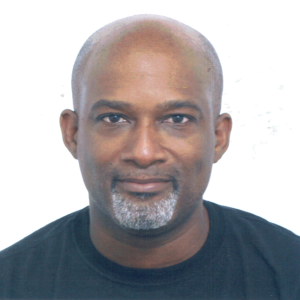
John A Bowleg
Professional Engineer, Senior Hydrologist & National Project Coordinator (The Bahamas)
UNESCO Intergovernmental Hydrological Programme (IHP) / Government of The Bahamas
Mr. Bowleg is a Professional Engineer and Senior Hydrologist with more than thirty years of engineering, environmental, and hydrological experience across the United States, Latin America, and the Caribbean. His expertise spans civil engineering project management, environmental monitoring, coastal zone management, hydrological design, reverse osmosis, renewable energy, waste management, and wetland conservation.
He currently serves as the National Project Coordinator for The Bahamas, leading the scaling of resilient water-energy technologies with a focus on ocean-wave-current energy and Ocean Thermal Energy Conversion (OTEC) research and development. Throughout his career, he has worked extensively with international organizations, including the Organization of American States (OAS), UNESCO, the World Meteorological Organization (WMO), the Ramsar Convention on Wetlands, and the International Water Association (IWA), contributing to regional and global water and sanitation initiatives.
As part of UNESCO’s Intergovernmental Hydrological Programme (IHP-IX) for 2022–2029, Mr. Bowleg serves as Vice-Chair for Priority Area 1: Scientific Research and Innovation, advancing scientific capacity, technology, and sustainable water resource management. He also serves as an Output Lead for Priority Area 5: Water Governance, supporting science-based governance, climate resilience, and informed decision-making to strengthen community resilience to global change.
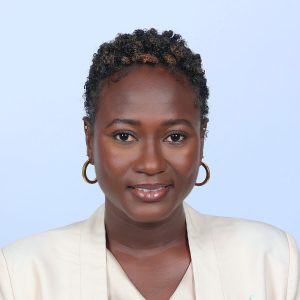
Shaneica Lester
Lecturer in the Faculty of Science and Technology
University of the West Indies Mona Campus, Jamaica
Dr. Shaneica Lester is an Environmental Geographer and Lecturer at The University of the West Indies, Jamaica, focusing on water security, environmental governance, and climate change adaptation in Caribbean Small Island Developing States (SIDS).
Her research examines how environmental resources, institutions, and communities interact to shape vulnerability and resilience. Dr. Lester applies this work across urban and rural contexts, engaging vulnerable communities, small-scale farmers, and youth to build on-the-ground adaptive capacity. Increasingly, she draws on nexus-based approaches to analyse the interconnections among water, energy, and food systems, ecosystem services, and local communities.
In Jamaica, Dr. Lester contributes directly to public resource governance as Chair of the Water Resources Authority Board of Directors and the Forestry Advisory Board.
Internationally, she serves on the Scientific Advisory Committee of the Inter-American Institute for Global Change Research and the IWRA Islands and Water Task Force and was a Fellow and Contributing Author to UNEP’s Seventh Global Environment Outlook (GEO-7).
Across these roles, she combines academic research with policy engagement to identify pathways toward sustainable and inclusive resource governance in the Latin America and Caribbean region.

Laurayne Lucky
Executive Director
The Caribbean Water and Wastewater Association (CWWA)
Laurayne is the Executive Director of the Caribbean Water and Wastewater Association (CWWA), a leading regional non-governmental organization established in 1991 and dedicated to advancing the sustainable management of water and sanitation in the Caribbean. Since assuming the role in 2023, she has provided strategic leadership to strengthen regional cooperation, promote innovation, and champion resilient, climate-smart water and sanitation services across the region.
With more than nineteen years of experience in the water sector, Laurayne has built an extensive career spanning utility operations, regional development, strategic leadership, and institutional strengthening. Her expertise includes strategic planning, project management, climate resilience, disaster risk reduction, drought planning and management, integrated water resources management (IWRM), stakeholder engagement, governance, and organizational change management. She has been instrumental in fostering partnerships among Caribbean governments, utilities, regional institutions, development partners, and the private sector to accelerate investment and improve the sustainability of water and sanitation services.
Before joining CWWA, Laurayne spent over sixteen years with the national water utility of Trinidad and Tobago, where she led strategic initiatives focused on operational excellence, climate adaptation, water resource management, and organizational transformation. As Executive Director, she has positioned CWWA as a leading regional advocate for water security, safely managed sanitation, wastewater management, circular economy approaches, disaster resilience, and sustainable financing. She continues to coordinate initiatives that strengthen utility capacity, promote regional knowledge sharing, expand partnerships with international development agencies and multilateral organizations, and advance innovative financing mechanisms to support Caribbean Small Island Developing States (SIDS) in addressing the impacts of climate change.
A passionate advocate for sustainable development, Laurayne believes that achieving universal access to resilient water and sanitation services requires strong governance, policy and regulatory reform, regional collaboration, technological innovation, and meaningful community engagement. She holds a Bachelor’s degree in Geology, postgraduate qualifications in International Trade and Commerce, and has completed training in several water and sanitation-related fields.
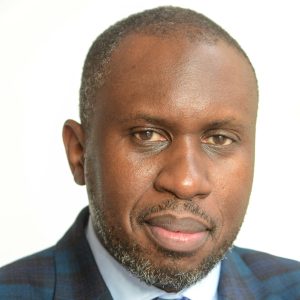
Makane Moïse Mbengue
Director, Department of International Law and International Organization & Professor of International Law
Faculty of Law, University of Geneva
Makane Moïse Mbengue is Director of the Department of International Law and International Organization and Professor of International Law at the Faculty of Law of the University of Geneva. He is also an Affiliate Professor at Sciences Po Paris School of Law.
He is President of the African Society of International Law and a member of both the Institut de Droit International and the Curatorium of The Hague Academy of International Law.
Professor Mbengue has acted as an expert for the African Union, the Secretary-General of the United Nations, the United Nations Economic Commission for Africa, the United Nations Environment Programme, and several river basin organizations in Africa.
He is Vice-President of the Implementation Committee of the UNECE Water Convention and has been involved in the negotiation of several water agreements and instruments in Africa.
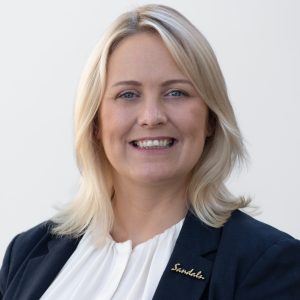
Kirstin McCarthy
Director of Sustainability
Sandals Resorts International
Kirstin McCarthy is the Corporate Director of Sustainability for Sandal Resorts International and is responsible for its ESG strategy and driving culture change and sustainability improvements across all its resorts, operations and sustainable development. Kirstin joined Sandals in December 2023.
Prior to joining Sandals, Kirstin was the Executive Director UK for Holcim, a global leading supplier of building and construction materials.
Recognized throughout her career as a positive and people-oriented leader,
Kirstin is deeply committed to embedding sustainability principles into the corporate strategy and culture of organisations.
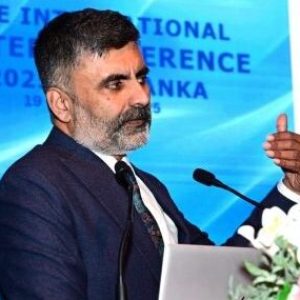
Assela Pathirana
Associate Professor
IHE Delft Institute for Water Education
Dr Assela Pathirana is an Associate Professor at IHE Delft Institute for Water Education in the Netherlands, specialising in digital water systems, water infrastructure asset management, urban water systems, and climate adaptation.
His work focuses particularly on the challenges faced by small islands and small water systems, where limited resources, geographic isolation, climate vulnerability, and institutional constraints require practical and locally appropriate solutions. He leads and contributes to research and capacity-development initiatives in the Caribbean, the Indian Ocean, South Asia, and other small-island regions.
Dr Pathirana coordinates the Small Islands Research Group at IHE Delft and has extensive experience working with governments, utilities, universities, and local communities on resilient water supply, sanitation, groundwater management, digital applications, and sustainable infrastructure management. He is the author or co-author of more than 150 peer-reviewed publications, which have received over 5,500 citations. He has also contributed to IPCC assessment reports and the Asian Water Development Outlook.

Natasha Ramkirpal
Group Lead: Water Security & Optimisation
Food & Beverage Manufacturing
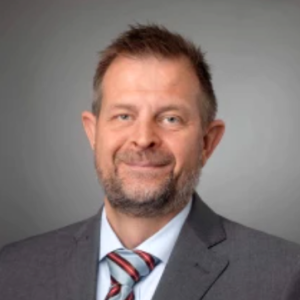
Christian Severin
Senior Water Specialist
Papua New Guinea and the Pacific region
Christian Severin is the Senior Water Specialist for Jamaica and the Pacific Region at the World Bank.
Before his current role, Mr. Severin managed the Global Environment Facility’s diverse International Waters portfolio spanning both freshwater and marine system solutions. This combined with support to the Climate Adaptation Fund’s work, gives him a strong insight into climate adaptation, environmental, water and wastewater issues ranging from local applications and solutions to in-depth understanding of the associated global politics arena.
Mr. Severin is a Danish national and before joining the bank in 2005, he worked in private water and wastewater sector companies and taught. He holds a Master of Science and a Bachelor of Science degree, both from the Danish Royal Veterinary and Agricultural University (now Copenhagen University).
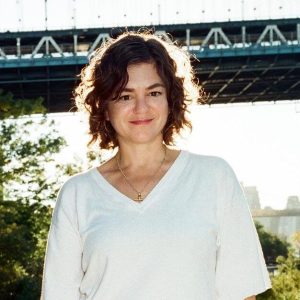
Emily Wilkinson
Researcher, Journalist & Adviser
Small Island Developing States (SIDS)
Dr Emily Wilkinson is a researcher, journalist, lecturer and adviser on Small Island Developing States (SIDS), working at the intersection of climate policy, access to finance, and long-term development. She is founder and director of the Resilient and Sustainable Islands Initiative (RESI), a global advisory network for SIDS. As Chief Scientific Adviser to the Climate Resilience Execution Agency for Dominica (CREAD) Emily was central to Dominica’s ambition to become the world’s first climate-resilient nation. She now advises the Alliance of Small Island States (AOSIS) on climate adaptation and finance. She co-hosts the podcast Small islands, Big Picture, and has written over 50 books, articles and reports on climate and development. Emily holds a PhD in Human Geography from University College London.
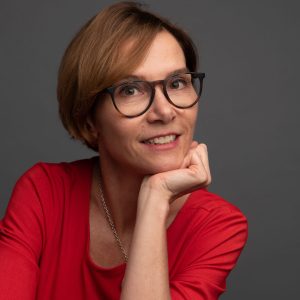
Christina Voigt
Professor
Academic in International Environmental Law
Professor Christina Voigt is a leading expert in international environmental law, specialising in climate change, biodiversity conservation, environmental multilateralism and sustainability. She chairs the Climate Law thematic group at the Faculty of Law, Department of Public and International Law, and serves as Chair of the IUCN World Commission on Environmental Law and Co-Chair of the Paris Agreement Implementation and Compliance Committee.
From 2009 to 2018, she served as principal legal advisor to the Norwegian Government during UN climate negotiations, contributing to the negotiation of the Paris Agreement and its Rulebook. She also acted as IUCN’s lead legal counsel in climate change advisory proceedings before international courts.
Professor Voigt has authored numerous academic publications and books on environmental law and governance. She has advised the United Nations Development Programme and the United Nations Environment Programme and contributed to the UN Secretary-General’s 2018 report on gaps in international environmental law.
Her contributions to environmental law have been recognised with several international awards, including the 2025 Hans Sigrist Prize and the 2025 ICEL Burhenne-Guilmin Award for the Advancement of the Environmental Rule of Law.
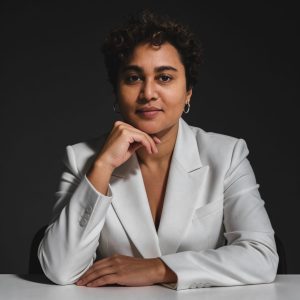
Nayana Williams
CEO and Founder
Lifespan Company Limited, Producer of Lifespan Spring Water
Nayana Williams is the visionary founder and CEO of Lifespan Company Limited, a role she has held since 2005. With a strong focus on strategic leadership, Nayana has dedicated herself to developing and articulating the company’s vision and mission, to ensure that all operations align with long-term objectives. Her expertise in high-level decision-making and complex problem-solving enables her to navigate challenges effectively, while implementing robust processes to enhance organizational efficiency.
Under her guidance, Lifespan has fostered a positive corporate culture that motivates employees and promotes innovation. Nayana places a strong emphasis on talent acquisition and development, by building a resilient leadership team capable of meeting the company’s evolving needs. She is also committed to identifying potential risks and establishing mitigation strategies, ensuring compliance with all laws and regulations. A champion of adaptability and change, Nayana Williams continues to lead Lifespan Company Limited toward a prosperous future. Nayana holds a Master of Law Degree in International Law and a Bachelor of Science Degree in Business Administration.